Anyone can queue up 45 swing songs and press play. Keeping a Lindy Hop social floor full for three hours is a different skill. It's less about rare finds and more about pacing: knowing when to push the energy, when to let the room breathe, and when to land the ending so dancers leave wanting more. This guide walks through how experienced DJs build that arc, and gives you a starting template you can adapt.
What a good social feels like
Think about the last great social you danced. The room probably went through several phases: a warm-up that let early arrivals get their legs under them, a long middle stretch where the floor stayed packed and the energy built gradually, one or two peak moments that people still talk about the next day, and a gentle wind-down so the final song didn't feel abrupt.
That arc doesn't happen by accident. It's the DJ's job. Music is what shapes the room, more than the decor, the lights, or even the floor itself.
The tempo mix
A rough target for a Lindy social: roughly 30% slow, 55% medium, 15% fast. Slightly more medium than people expect, and intentionally fewer fast songs than the genre has on offer. (If you want the long version of what each of these bands actually feels like on the dance floor, see our guide to Lindy Hop BPM zones.) A few reasons:
- Medium tempo (roughly 120 to 160 BPM) is where most dancers are comfortable for long stretches. It's the workhorse.
- Slow songs (100 to 120 BPM) do double duty: they reset energy, they let connection-focused dancers shine, and they make the faster songs that follow feel faster.
- Fast songs (160+ BPM) are exciting but exhausting. Play too many and you thin out the floor as dancers peel off to rest. The 15% here is the sweet spot for most intermediate crowds.
Adjust these ratios for your local scene. A DJ camp with strong dancers might go 20/55/25. A beginner-friendly Thursday social might go 35/60/5. The point is to know the ratio you're targeting, not to improvise it.
The shape of the evening
The mix above tells you the ingredients. The arc tells you the order. A template that works for a three-hour social:
Warm-up: first 20 minutes
Slow to medium tempo, nothing over 135 BPM. The room is half empty. Early dancers need time to warm up physically and socially. Don't waste your best fast tracks here, most of the room won't hear them.
First build: minutes 20 to 60
More dancers are in. Start cycling through medium tempo, sprinkle one or two slightly faster tracks to signal the energy is rising. Save one slow song around the 45-minute mark to give people a chance to catch their breath.
Golden hour: minutes 60 to 120
The floor is full and the room is warm. This is where your best music goes. Alternate medium-fast with medium, one fast track per four or five songs, and two or three blues or slow tracks spaced out. Aim for at least one "peak" moment around the 90-minute mark: a song everyone knows, played at the right moment, with the whole floor feeling it.
Rest and second peak: minutes 120 to 160
People are tired but they want to stay. This is a good place for a second slower stretch, two or three blues or mid-slow tracks in a row, followed by a second energy build toward another peak. Don't try to top the golden hour peak here; just give the room a second emotional moment.
Wind-down: final 20 minutes
Tempo drops steadily. End with a slow to mid-slow classic that feels like a goodbye, not a cliff. Dancers should walk out thinking about the last song, not checking their watches.
The moves that separate good DJs from great ones
A few details that matter more than people realize:
Leave space between peaks. If you play three "banger" tracks in a row, the fourth one lands flat. Energy works like contrast: a medium song after a fast song makes the next fast song feel twice as fast.
Watch the floor, not the clock. If half the room is sitting down during a medium song, it wasn't the right medium song. Don't panic, just adjust the next three picks. If the floor is full and sweating, don't pull them off with a blues track just because your template says so.
Know your room's energy ceiling. Some crowds genuinely love 180 BPM and will dance to it all night. Others will politely sit out anything over 155. Read the first 30 minutes and calibrate.
Don't hide your best tracks. A rare, beautiful recording buried in the warm-up is wasted. Save the emotional high points for minutes 60-120, when everyone's in.
Doing it by hand vs letting a tool help
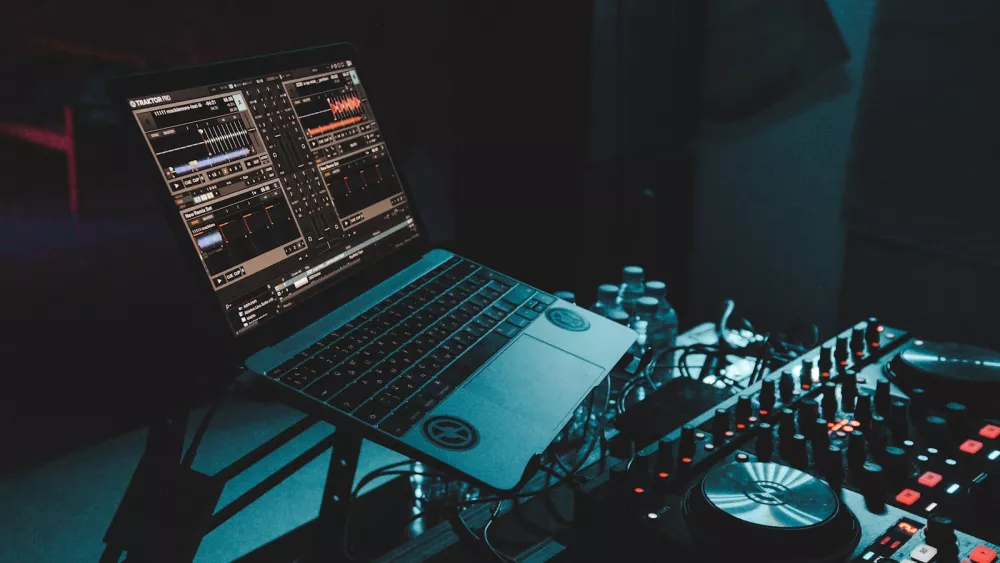
Photo: Ilya Mirnyy on Unsplash.
You can absolutely build this by hand. Many DJs do, and it's a satisfying craft. Expect to spend 90 minutes to two hours on a three-hour set if you're starting from scratch, or 30 to 45 minutes if you're remixing a template you've refined over time. One caveat: if you're sorting your library by BPM using Spotify or an audio app, know that automated BPM data is often wrong on swing music. Our article on the Lindy Hop BPM problem explains why, and what to watch out for.
If that time commitment is getting in the way of you actually DJing, SwingPlaylist is built to do exactly this. You describe the event (name, date, duration, audience energy), pick a vibe, and get a tempo-aware playlist with the arc described above already baked in. It handles the warm-up, the wave pattern, the wind-down, and avoids the BPM detection problems that break other playlist tools on swing music. You still tweak the final result, but you start from a smart draft instead of a blank page.
Whatever tool you use, the principles in this article matter more than any software. A great Lindy Hop social lives or dies on the tempo arc, the contrast between songs, and the DJ's willingness to read the room. Get those right and the music will carry the night.